…which the organisers sped up even further by playing only one anthem and giving up on introducing the newcomers, something I find hard to understand at a moment when practically none of those present had ever seen these players. And so Dejv and Zia Mahmood had to introduce themselves through their play, and they certainly did not embarrass the Vietnamese Burning Cards. The Vietnamese unit will definitely be one to reckon with at the Team Championship.
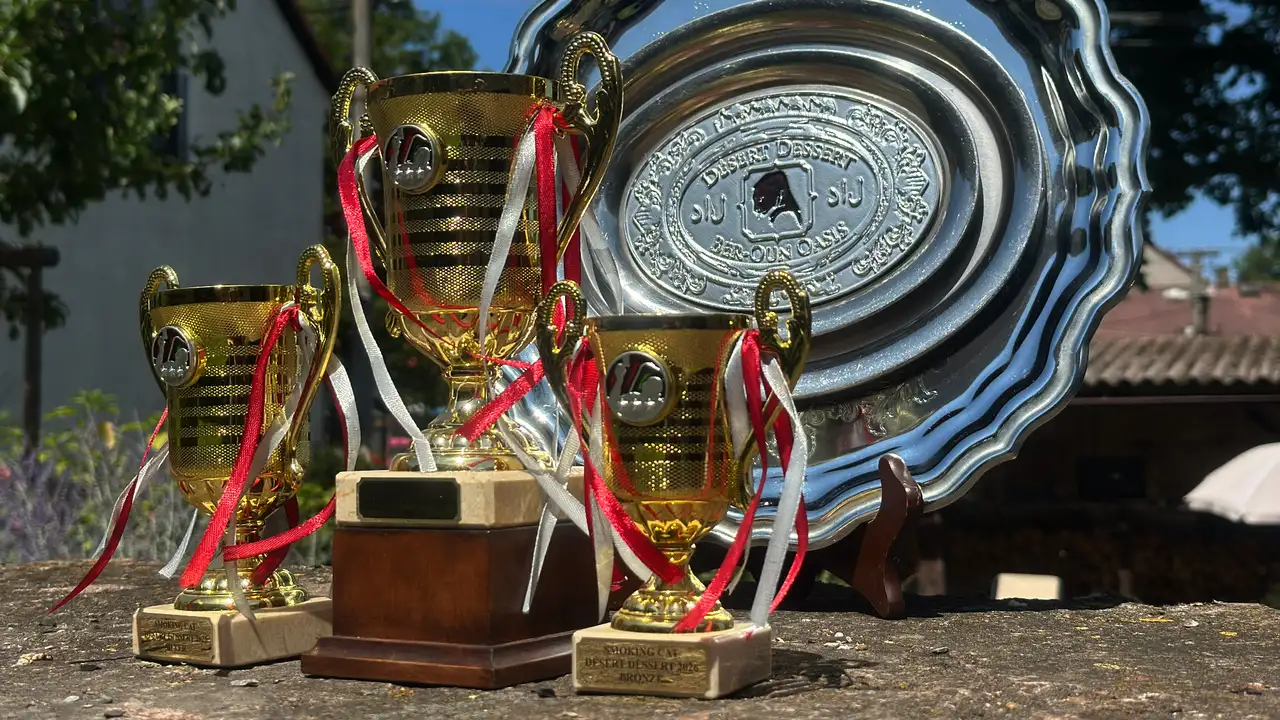
The Portuguese organisers traditionally hand the winners port wine, and this year was no exception. In this respect, too, the Union should think about innovating tournament funding—the differences are enormous. Next to AfroCat, the Mongolian Open or Copo do Monteiro look like the Prostejov ITF next to Indian Wells. And one can assume that at Fiesta Praga OLE! there will once again be markedly “better times” when it comes to material prizes. The classics have more or less found their way, whether it’s the Qatari sweet prizes, the SeptemberFest honeys, the fruit and packaging-free treats, or the pickled sausages from RiverCat, even if they do drive some players a little away from the tournament. But that’s also why players can choose tournaments as they please and pick the atmosphere they want to play in. So hopefully in the future we’ll see a proper standard at the Nationals, too.
The level of material prizes is certainly not the only thing that has to change, though. The most fundamental change must be the dynamics of play. Most of the games were utterly unwatchable for spectators, and the tournament was still being played out after 11 p.m. If this trend were to continue, it could easily happen that soon a single game will take fifteen or twenty minutes. Madness.
The referee has understanding for pondering over certain moves, but he can hardly tolerate half-minute deliberation over seven tricks every round. That’s not how Smoking Cat is played. That’s how chess is played. Likewise, the referee may call on a player to deal faster, and the fact that a player “feels offended” by this call makes no sense at all. If the rules say the game should be dynamic, then everyone around ought to be the ones “offended” by needless stalling.
Players, who have to hold up the flow of the game for long minutes, even though Smoking Cat is a strategic game, not a short-term memory contest. Organisers, who have to fit within the time constraints of the venue where it’s being played. The venue’s staff. Spectators, who want to see the game and not endless sighing and staring at a pair of cards, one of which is the king of acorns and the other the ace of acorns.
No, don’t laugh, I’ve seen unbelievable “pondering” in my career—this could easily have happened. It also bothers, of course, the players from the other table, who know how to play and wait three quarters of an hour for the final, and then stress about missing their train. Yes, those are the ones who ought to be “offended.” Thankfully (sadly) this set of players has neither the appetite nor the authority to “hassle” anyone for being unable to deal in two minutes. That’s what the referee or organiser is for, and they only do it the moment nothing else is left, because the very completion of the tournament within the prescribed parameters is at stake.
I do of course understand that among card players there are also people who never did any sport in their lives. Elite Smoking Cat is a sport. We have no doping commission, we have no betting, but everything else has its rules, and the rules stand above a player’s ego or opinion. The Union has a tool that is reluctant to use, namely capping a round at a time limit of two hours. This option was on the table at CdM, too, but in the end the organisers didn’t reach for it. Personally I’m glad—it’s a rule that may save the running of a tournament, but on the other hand it doesn’t penalise slow tables in any way and distorts the results. But from what I heard in the corridors today, something more radical is being prepared. So we’ll see.
And now to the tournament, which delivered an absolutely unbelievable finish.
SKŘET (GOBLIN)
If there’s one person the slowing pace of play doesn’t suit, it’s unmistakably Oldin. The winner of the very first edition back in 2020 has been outright struggling in recent seasons, and even at this tournament, surely his favourite one, he failed to find his form. Just under 55% made him the weakest player of the group stage, and he went into the small final from seat A. Another disappointment, especially for the traditionally demanding Mongolian fans, are the performances of Paczessa. After a failed dress rehearsal at AfroCat, where she wasn’t playing for points, she failed to gnaw her way into the final even at her important National. Unfortunately the stress and responsibility of being an official are taking their toll on her. She’s forced to field questions about everything under the sun; there are players who pester her even during the game itself just to ask something. The results show it’s not easy to filter out such circumstances. Paczessa above all botched the start of the tournament, gradually improving her play, but it wasn’t enough for better than 8th place overall. From table 2, the eventual winner of the small final Cdr Riker also went out, and the play there was over after 20 games. At table 1 at that moment all six players were still in, and there was almost an hour’s wait for it to finish. Here the first to lose was Eddulla, followed by the newcomer Dejv and in conclusion the Vinohrady player Matiti. There were only 24 games in the long run, but the time difference was truly huge.
ODULA
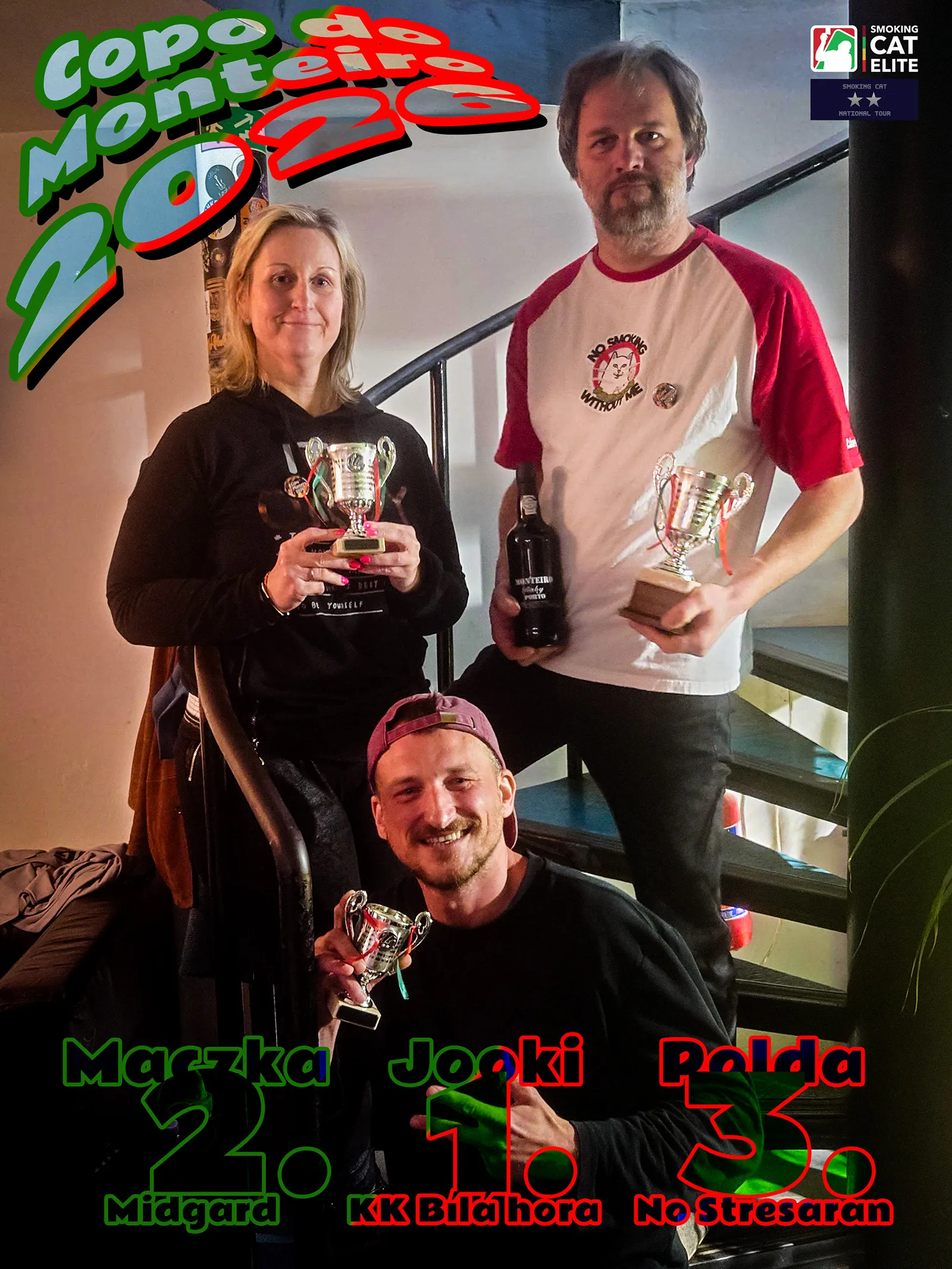
All three of the biggest favourites made it through to the grand final, namely Jooki (100% group stage), Maczka (87.5%) and Katarinator (76.5%), joined by the newcomer Zia Mahmood, Osvald and Polda. The course of the final gave hope of a record-short run. Zia Mahmood lost his first three games, and no sooner had he stopped his run than Osvald repeated the “hat-trick”. Jooki lasted 21 games in the tournament without a loss, and people were already starting to whisper about the first hundred in the history of the game. Jooki’s first letter, however, changed the course of the whole final. True, both Osvald (50% in the final) and Zia Mahmood (also 50%) went out shortly afterwards, but the remaining four more or less began taking turns at losing. The first to reach the edge of the Word (E!) was the incredible great Jooki, and it was clear that his only chance of victory would be a full position and a decisive game. At that moment he was one letter behind Maczka and even two letters behind Katarinator and Polda.
The decisive moment of the tournament was final game number 26. After the second trick it was practically settled; the game was worth 15 points, and in Polda’s hand was the single card that could have taken victory away from him. Polda, quite inexplicably, did not get rid of that card, took the trick with a ten and the king of the same suit that he kept, and drew in other four tricks. That made 18, the fourth letter, and the following game had to decide it. But in that one Polda could no longer win the tournament, and the only thing at stake was who would stay fourth and whether Maczka or Jooki would win. And it was no surprise that KK Bila Hora didn’t fluff this scenario, so Jooki could, by a real whisker, add the sixteenth title of his career and his ninth since 2022, when he has regularly chalked up at least one first per year. Yes, you read that right. The last time he won nothing was the 2021 season. Since then, fourteen podiums. A phenomenon.
Nevertheless, if I may return once more to this tournament’s unwanted theme, not even Jooki is among the players blessed with the ability to play briskly. I very much doubt they’d put up with this style at Kozlovna.
And one more gem. In the guessing contest, nobody picked the winner!
The club standings ahead of the Team Championship are starting to take shape, and the expected biggest favourites from Bílá Hora have moved into the lead, closely followed by Royal. So the Czech school is once again setting the direction, but it’s not over yet, and clubs such as Midgard or No Stresaran could easily move to the top after the Fiesta.
Another point of interest is that Polda, despite the unfortunate end at the final table, has just as many points as the three stars of Dashinchilen combined. Dashinchilen has dropped to tenth place in the season, and its last hopes of any improvement will rest at Fiesta Praga OLE! on Fenho and above all the veteran Padre. There we can look forward to the return of the Irish cat represented by experienced Zhaf, who has transferred to Cork McEima, and thanks to Lucka the last club we haven’t yet seen this year will also join in: the famous Hardangervidda Smoking Elks.
Above all, let’s hope they play faster.
for SCWU media
Leon Berger